On July 9th, activity was feverish as the soldiers packed their gear and drew ammunition and rations. Tents were struck. Excess gear was turned into the supply sergeants. Dinner was served early that evening, and then the troops were transported to the airfields. Operation Husky was on!
Each member of the Regiment received a slip of paper with the following message from Colonel James Gavin:
Tonight you embark upon a combat mission for which our people and the free people of the world have been waiting for two years.
You will spearhead the landing of an American Force upon the island of Sicily. Every preparation has been made to eliminate the element of chance. You have been given the means to do the job and you are backed by the largest assemblage of air power in the world’s history.
The eyes of the world are upon you. The hopes and prayers of every American go with you.
Since it is our first fight at night you must use the countersign and avoid firing on each other. The bayonet is the night fighter’s best weapon. Conserve your water and ammunition.
The term “American Parachutists” has become synonymous with courage of a high order. Let us carry the fight to the enemy and make American Parachutists feared and respected through all of his ranks. Attack violently. Destroy him wherever found.
I know you will do your job.
Good landing, good fight. And good luck.
- Colonel Gavin
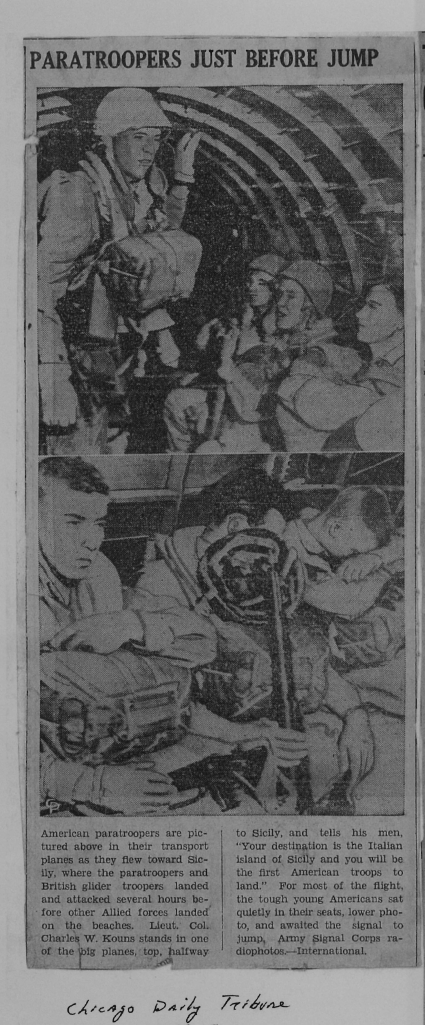
The men finally chuted up, and the planes began to take off. It took an hour and six minutes to get all the aircraft in the air on a route leading to Malta before turning toward Sicily. Everything to that point had gone according to plan. After that, very little went according to plan.
The troop carriers were to fly 200 feet (about 61 meters) above the sea to avoid radar detection. However, a violent wind storm whipped the carrier formations, creating problems as the pilots fought the wind. At such a low level, the pilot feared being thrown into the waves just below their aircraft. The flight crews were navigating by compass and elapsed time. The wind upset the elapsed time measurements and blew the formations off their compass headings. The storm midway on the route became a tailwind, so most pilots overshot their first significant landmark, Malta.
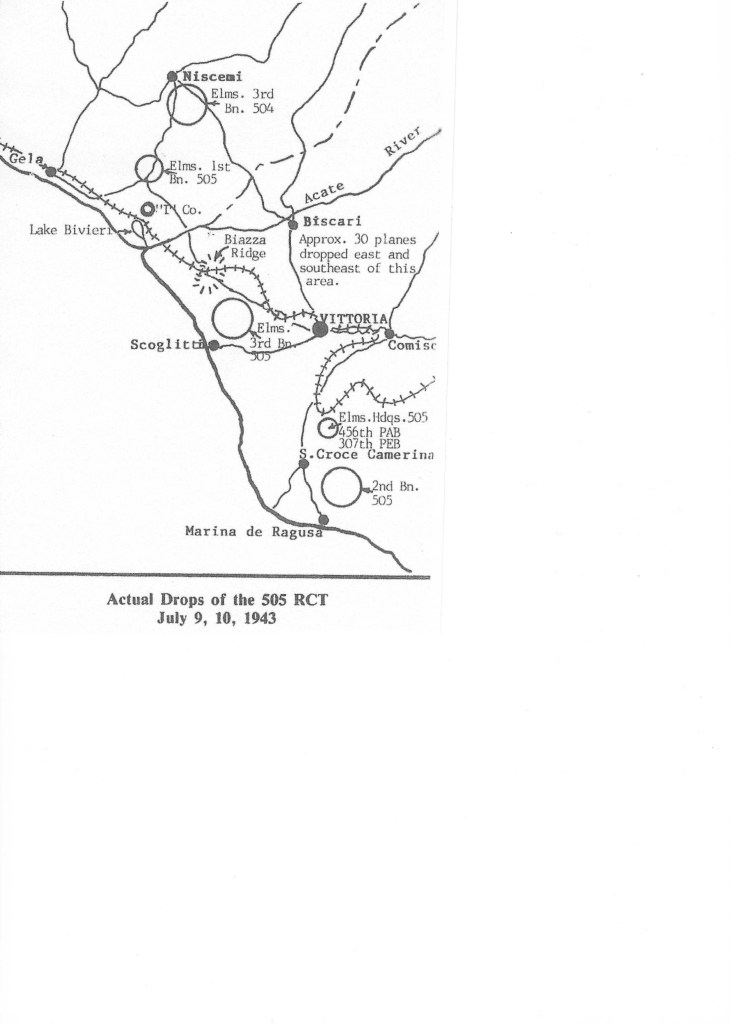
The early hours of the assault to liberate Sicily could have been a disaster. A few planes, either because of luck or superior navigation, managed to drop their sticks of 16 paratroopers within one to three miles of the correct drop zones. Half of A Company of the 1st Battalion, including the battalion command element with Art, were dropped near the Y crossing: the Regiment’s most important objective. The rest of the battalion and Regiment were scattered far from their assigned drop zones. The resulting little groups of paratroopers, as they had been trained, proceeded to attack every German or Italian element that they encountered. This small group of soldiers led by Art Gorham was to accomplish the mission assigned to the entire Regiment.
 Bruce B.G. Clarke